

Deepor Beel Guwahati is a permanent freshwater lake southwest of the city and a staging site for migratory birds. It offers a wetland outing beyond Guwahati’s city landmarks; from this hotel in Guwahati, the wetland is about 26 minutes by car.
- Location: about 10 km southwest of Guwahati city.
- Deepor Beel is Ramsar Site 1207 and an Important Bird Area.
- Winter is recommended for migratory birds.

What to expect at Deepor Beel
Deepor Beel is a broad freshwater wetland with ecological and practical importance for Guwahati. It is Ramsar Site 1207, an Important Bird Area and a major stormwater storage basin for the city.
Deepar Beel Sanctuary covers 4.14 square kilometres. The notified Deepor Beel area is about 6.89 square kilometres, while the total wetland area is about 13 to 15 square kilometres.
Notable bird species include Greater Adjutant Stork, Whistling Teal, Open-billed Stork, Shoveler, Pintail, Garganey and Pheasant-tailed Jacana. Elephants from the adjacent Rani–Garbhanga landscape occasionally visit the sanctuary too.
How do you get to the wetland?
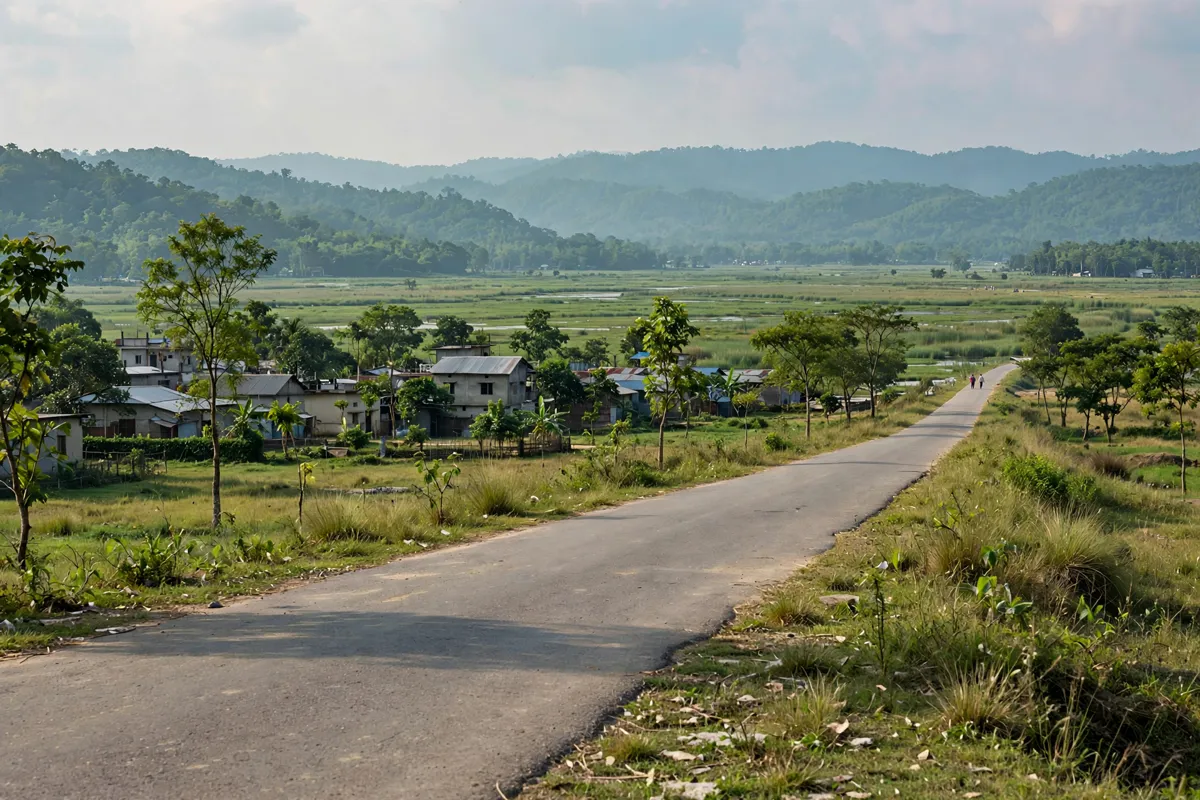
Deepor Beel lies southwest of Guwahati. If you are planning a city itinerary, the one-day Guwahati itinerary can help you organize other stops by area.
The Indira Gandhi Athletic Stadium is another Guwahati stop, about 23 minutes by car from Royal Heritage. Its location can help when you are planning a broader outing around the city.
Confirm access arrangements with the Assam Forest Department before setting out. For a sports-related visit, check what to know about Indira Gandhi Athletic Stadium.
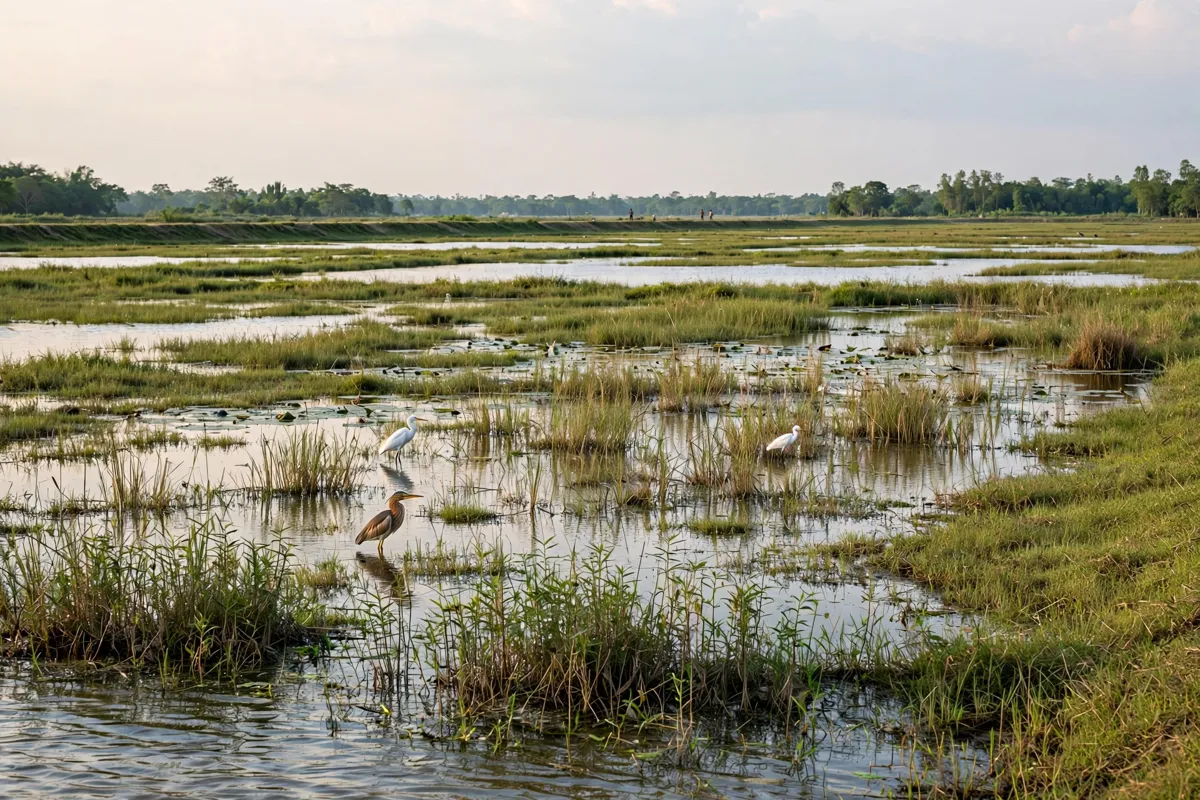
Birdwatching and visitor etiquette
Deepor Beel’s importance for birds makes wildlife protection relevant to any visit. Shooting and bird-trapping are prohibited by law.
Ask the Assam Forest Department about current access rules before planning activities beyond observing the wetland.
When should you visit, and what should you check?
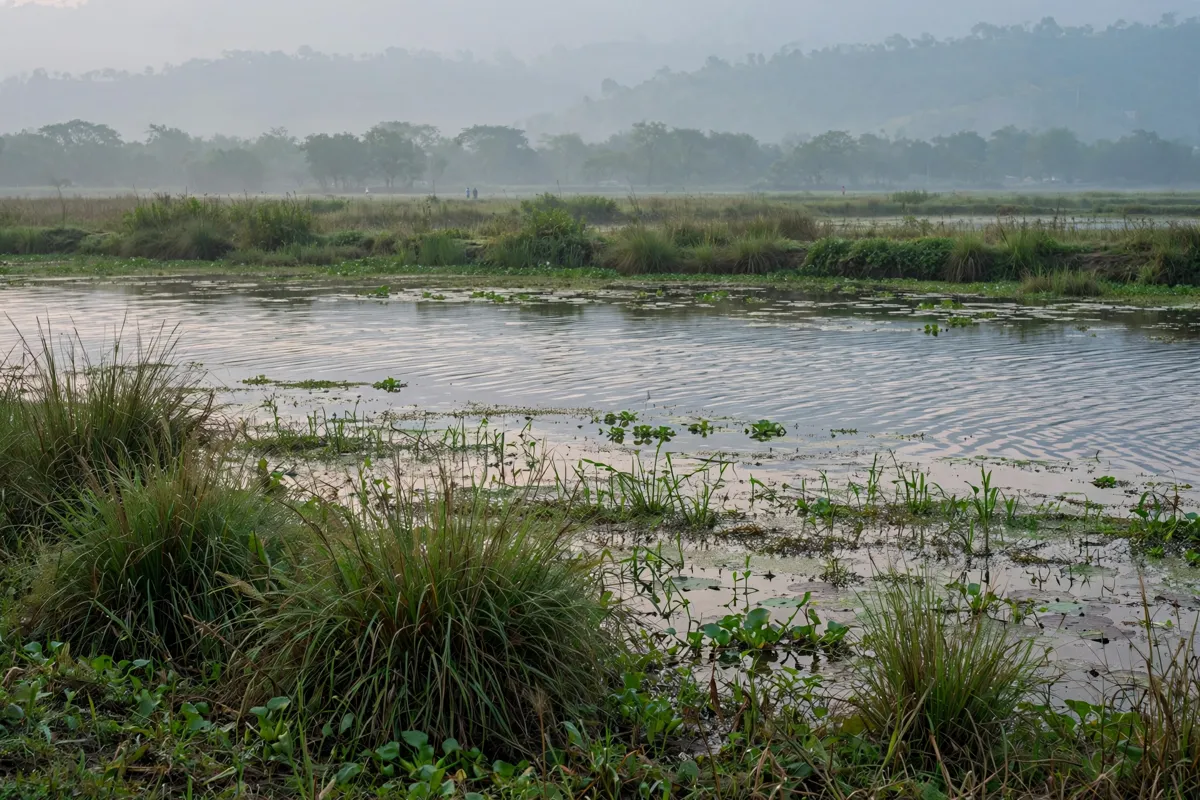
Deepor Beel can be visited throughout the year, with winter recommended for migratory birds. October to April is the best season for visiting Deepar Beel Sanctuary.
Allow a half-day to cover Deepor Beel. Check the official site before you go.
FAQs
Is Deepor Beel a wildlife sanctuary?
Deepor Beel is associated with Deepar Beel Sanctuary, which covers 4.14 square kilometres.
What birds can you see at Deepor Beel?
Notable species include Greater Adjutant Stork, Whistling Teal, Open-billed Stork, Shoveler, Pintail, Garganey and Pheasant-tailed Jacana.
Can you visit Deepor Beel throughout the year?
Yes. The wetland can be visited year-round, while winter is recommended for migratory birds.
Is there an entry fee or set opening time?
Confirm current arrangements with the Assam Forest Department before travelling.